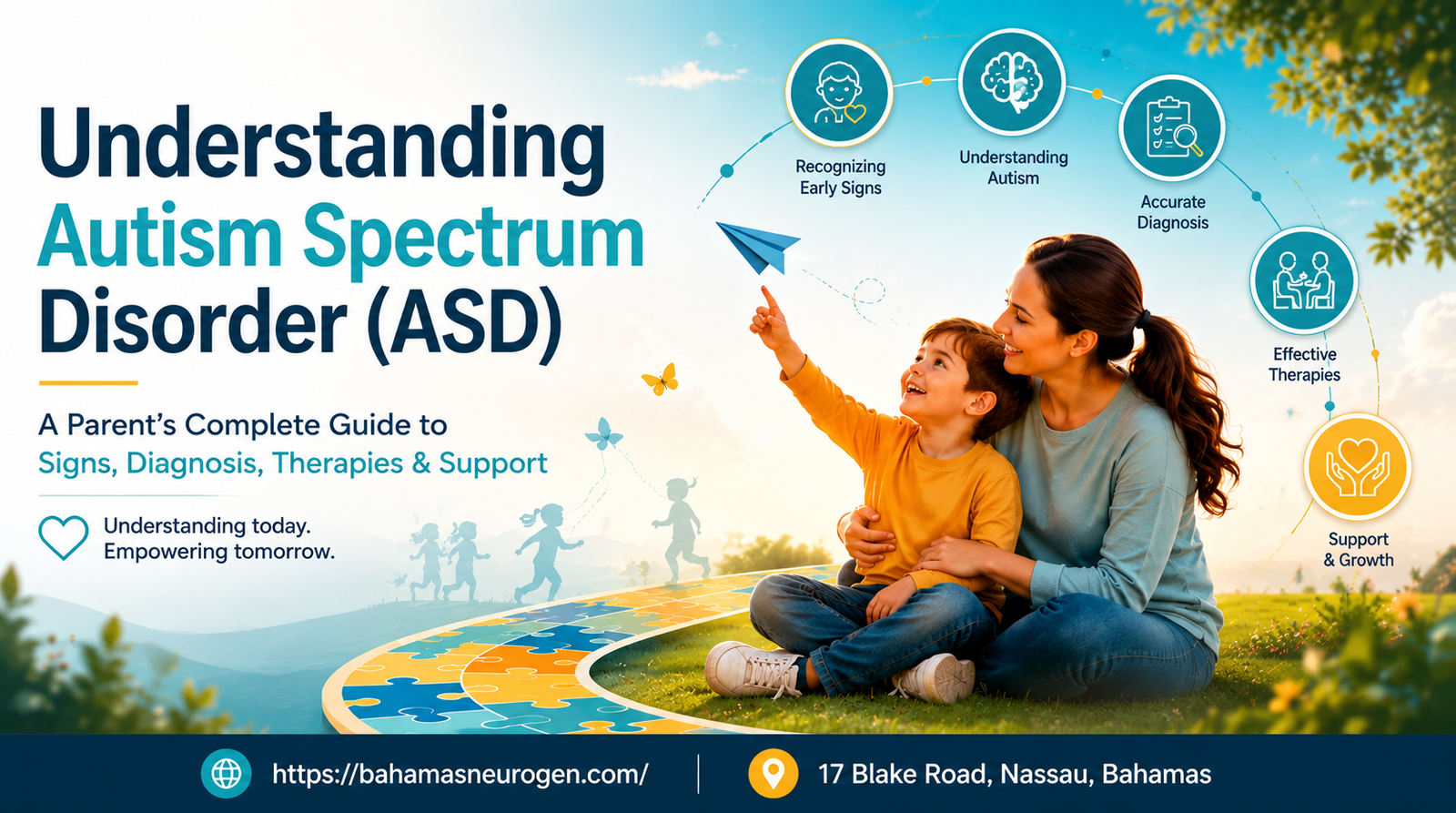
Autism spectrum disorder (ASD) is a neurodevelopmental difference that shapes how a child communicates, learns, and experiences the world. The CDC reports about 1 in 31 children is identified with autism in the United States, and the World Health Organization estimates roughly 1 in 127 people globally are on the spectrum.
There is no cure. But with an integrated therapy plan and neurorehabilitation, children grow steadily in communication, daily living, and overall wellbeing, often building rich and meaningful lives over time.
This guide walks parents and caregivers through signs, causes, brain development, diagnosis, therapies, early intervention, and what improvement realistically looks like over time.
Key Takeaways
Autism is lifelong, not limiting. There is no cure for autism, but with an integrated therapy plan and neurorehabilitation, children can grow, develop, and live meaningful lives.
It is more common than many parents realize. The CDC reports about 1 in 31 children is now identified with autism.
Early signs matter. Autism can often be reliably identified by age 2, though the average age of first diagnosis is closer to 5.
Therapy aims at function, not cure. Coordinated, multidisciplinary care produces meaningful progress.
Families are central. Informed, supported parents are one of the strongest predictors of long-term improvement.
What Is Autism Spectrum Disorder
Autism spectrum disorder, often called ASD or autism, is a neurodevelopmental difference. It’s woven into how a child’s brain develops from the earliest stages of life, and it shapes how they communicate, interact, learn, and experience the world.
Autism is not an illness. It reflects differences in how the brain develops and processes information. Because the brain is involved in everything from speech to movement to emotion, autism can influence many areas at once.
It is called a spectrum because no two autistic children look the same. One child may speak fluently but find social situations confusing. Another may communicate through gestures, pictures, or a device and show strong skills in memory or visual reasoning.
“
Autism is not something you caused, and not something your child needs to be fixed of.
Clinicians describe autism using three levels of support
Levels of Autism Support
The three levels of autism support, as described in current diagnostic frameworks (DSM-5-TR).
Level
Support Need
What It Often Looks Like
Level 1
Requires some support
Subtle social differences, mild routine preferences, some communication challenges
Level 2
Requires substantial support
Noticeable communication differences, stronger need for structure and predictability
Level 3
Requires very substantial support
Significant support across communication, learning, and daily living
There is no cure for autism. But with an integrated therapy plan and neurorehabilitation, your child can grow, communicate, build daily living skills, and live a meaningful, fulfilling life. The aim of good care isn’t to remove autism, it’s to help your child thrive in their own way.
Autism is also far more common than many parents realize. According to the CDC’s 2025 ADDM Network report, about 1 in 31 children (3.2%) is identified with autism, up from 1 in 36 in earlier data and nearly five times more common than in 2000, when the rate was 1 in 150.
Globally, the WHO-backed Global Burden of Disease Study 2021 estimates around 1 in 127 people are autistic, or roughly 61.8 million people worldwide.
These rising numbers reflect better awareness, broader diagnostic criteria, and improved access to evaluation.
If your child has just been diagnosed, please know this. Autism is not something you caused. Your child is the same child you have always loved. With understanding and support, the path ahead is far more manageable than it may feel today.
Signs and Symptoms of Autism in Children
Early signs of autism
No single sign confirms autism. Clinicians look for a pattern across several areas. Parents often notice these differences first, and that intuition matters.
Social Communication Differences:
Many autistic children make less eye contact than expected for their age. They may not respond when their name is called by 12 months. They may share fewer smiles or facial expressions during interaction.
Pointing, waving, clapping, and showing objects to a parent are important early milestones. When these gestures are delayed or rare, it can signal a difference in social communication.
Speech and Language Differences:
Language development varies widely. Some autistic children speak late. Some develop words and then lose them. Others speak fluently but use language in unusual ways, such as repeating phrases or sticking to one favorite topic.
Each pattern is different, and none alone confirms autism. What matters is the overall picture across communication, behavior, and development.
Repetitive Behaviors and Sensory Differences:
Many autistic children show repetitive movements such as rocking, hand-flapping, spinning, or lining up toys. They may prefer strict routines and become upset by small changes.
Sensory differences are also common. Some children are very sensitive to sound, light, texture, or taste. Others seek strong sensory input through movement, pressure, or visual patterns. These behaviors are not problems. They often help the child feel safe, regulated, or calm.
Early Signs of Autism by Age
Common early signs of autism grouped by developmental age range.
Age Range
Possible Early Signs
6 to 12 months
Limited eye contact, reduced response to name, few shared smiles, limited gestures such as reaching or pointing.
12 to 24 months
Delayed first words, limited pointing, less imitation, strong preference for sameness, repetitive movements, possible loss of words.
2 to 4 years
Unusual use of language, difficulty with pretend play, intense focused interests, strong sensory reactions, delays in dressing or feeding.
How Autism Can Look Different in Girls:
Autism is identified about 3.4 times more often in boys than in girls, according to CDC and NIMH data, with rates of roughly 1 in 20 boys and 1 in 70 girls. Many researchers believe this ratio overstates the true difference, because autism in girls often presents in subtler ways.
Many autistic girls mask their differences by carefully watching peers and imitating expected behavior. They may seem socially capable on the surface but feel exhausted and anxious underneath. Their intense interests in animals, characters, or people may appear typical and go unnoticed.
If you suspect autism in a daughter, even when the signs feel subtle, ask for a thorough developmental evaluation. Subtle does not mean absent.
What Causes Autism
Autism is caused by a combination of genetic factors and differences in early brain development
For parents, the most important truth is this. Autism is not caused by anything you did. It is not caused by parenting, diet, screen time, or vaccines.
“
Autism begins in the earliest stages of brain development, long before parenting choices, diet, or daily routines can play any role.
Genetic and Early Developmental Factors:
According to the NIH, genetics plays the strongest known role in autism. Autism is highly heritable, and many different genes contribute in different ways. Twin and family studies consistently rank autism among the most heritable neurodevelopmental conditions.
Family patterns are common. If a parent, sibling, or relative is autistic, the likelihood increases. Even so, autism is not predictable, and two children in the same family can develop very differently.
Some prenatal factors, such as advanced parental age, certain maternal health conditions, or birth complications, may contribute alongside genetic predisposition. No single environmental factor causes autism on its own.
What Does Not Cause Autism?
Autism is not caused by parenting style, screen time, daycare, or family structure. Older theories that blamed parents have been disproven and are no longer accepted.
Autism is not caused by sugar, gluten, dairy, or any specific diet. Some autistic children have dietary sensitivities, but these are part of how autism shows up, not its cause.
If you have ever wondered whether you caused your child’s autism, please set that worry aside. The science is clear, and your energy is far better spent supporting your child.
How Autism Affects Brain Development
Autism is a neurodevelopmental condition, which means it begins in how the brain forms and connects during the earliest stages of life. Understanding the brain side of autism helps families set realistic expectations and choose care that respects how their child actually learns.
These differences are variations in neural wiring that influence how a child processes information, communicates, regulates emotions, and experiences the senses. Many autistic individuals describe their brains as working differently, not wrongly, and current neuroscience supports this view.
Differences in Brain Connectivity:
NIH and NIMH research has identified differences in how regions of the autistic brain communicate with each other. Some areas may be more strongly connected than typical, while others may be less connected. This pattern, sometimes described as atypical connectivity, helps explain why autistic children often show strong abilities in some areas and significant support needs in others.
These differences are present from very early development and shape how the child experiences attention, language, social information, and sensory input. They are not the result of anything that happens after birth, and they cannot be reversed. They can, however, be supported.
How Autism Affects Sensory Processing:
The autistic brain often processes sensory information differently. NIH-supported research shows that areas involved in interpreting sound, touch, light, taste, and movement may be more or less responsive than expected in non-autistic peers.
For some children, this means sensory overload in busy environments. For others, it means seeking strong sensory input through movement, pressure, or visual stimulation. Sensory differences shape much of daily life and respond well to occupational therapy and sensory integration support.
The Role of Neuroplasticity:
Neuroplasticity is the brain’s ability to grow, adapt, and form new connections in response to experience. The young brain is especially adaptable, which is one of the key reasons early intervention produces such meaningful long-term gains.
Consistent, well-chosen developmental therapies support the brain’s natural ability to build new pathways for communication, learning, and emotional regulation. This is the scientific foundation behind neurorehabilitation
How Autism Is Diagnosed
Autism is diagnosed through a combination of developmental screening and a comprehensive multidisciplinary evaluation
The process can feel uncertain, but knowing what to expect helps families participate fully.
Developmental Screening:
Screening is the first step. It is usually done by a pediatrician during routine visits. It is not a diagnosis, just a structured check.
One common tool is the Modified Checklist for Autism in Toddlers, known as the M-CHAT. It is a short parent questionnaire about social communication, play, and behavior.
The American Academy of Pediatrics recommends autism-specific screening at 18 and 24 months , in addition to general developmental screening at other well-child visits. If you have concerns at any age, you can ask for screening at any time.
Comprehensive Evaluation:
If screening raises concerns, the next step is a full diagnostic evaluation. This is best done by a multidisciplinary team.
That team may include a developmental pediatrician, a child psychologist, a speech-language pathologist, an occupational therapist, and a pediatric neurologist. Each contributes a different view of your child.
Clinicians use structured observation tools such as the ADOS-2, along with parent interviews and developmental history. Diagnostic criteria from the DSM-5-TR or ICD-11 guide the decision.
Many autistic children also have co-occurring conditions such as ADHD, anxiety, sleep difficulties, gastrointestinal symptoms, or motor and sensory differences. A good evaluation identifies these too, because they shape daily life as much as autism itself.
Why Some Children Are Diagnosed Later:
Although autism can be reliably identified by age 2, the CDC reports the median age of first community diagnosis is closer to 5 years (about 4 years 11 months) . The trend is improving. The CDC’s 2023 data shows that 48 percent of children born in 2016 received an autism diagnosis before age 4 , a 1.6-fold increase compared with children born in 2012.
Children are often diagnosed later when signs are subtler, when access to specialists is limited, or when traditional understanding of autism does not match how the child presents. Girls, in particular, are frequently identified later. A later diagnosis is not a missed opportunity. Support, understanding, and progress are possible at any age.
Looking Bahamas NeuroGen’s multidisciplinary team brings together pediatric, psychological, developmental, and therapy expertise in a single, family-centered evaluation. We welcome families seeking thoughtful, specialized autism care.
Book a Confidential Consultation →
Therapies and Treatment for Children With Autism
Children with autism benefit most from a coordinated, multidisciplinary plan, not a single therapy. This approach is known as neurorehabilitation. The goal is functional improvement, helping your child grow in communication, regulation, learning, and daily skills.
No therapy is a cure. What good therapy offers is steady, meaningful progress that supports your child’s wellbeing and participation in family, school, and community life.
“
Functional improvement means real growth, not becoming non-autistic.
Core Neurorehabilitation Therapies
Core neurorehabilitation therapies commonly used in autism care.
Therapy
What It Supports
Psychological Intervention
Emotional wellbeing, coping, anxiety, identity, behavior.
Applied Behavior Analysis (ABA)
Structured skill building in communication, daily skills, and emotional regulation.
Speech Therapy
Spoken language, social communication, AAC, gestures, and signs.
Occupational Therapy (OT)
Daily skills, motor coordination, sensory regulation, attention.
Sensory Integration Therapy
Helps the nervous system process sensory input more comfortably.
Physiotherapy
Gross motor skills, posture, balance, and coordination.
Aquatic Therapy
Movement, regulation, and engagement in a supportive water environment.
Art Therapy
Creative expression, emotional regulation, focus, and confidence.
Diet and Nutrition
Growth, digestion, and overall wellbeing. Not a treatment for autism.
Parent Counseling
Family understanding, home strategies, and emotional support.
Integrative Therapies
Integrative therapies as adjunctive support, never as a substitute for core neurorehabilitation.
Therapy
Purpose
Important Notes
Hyperbaric Oxygen Therapy
Adjunctive physiological support
Always clinician-supervised
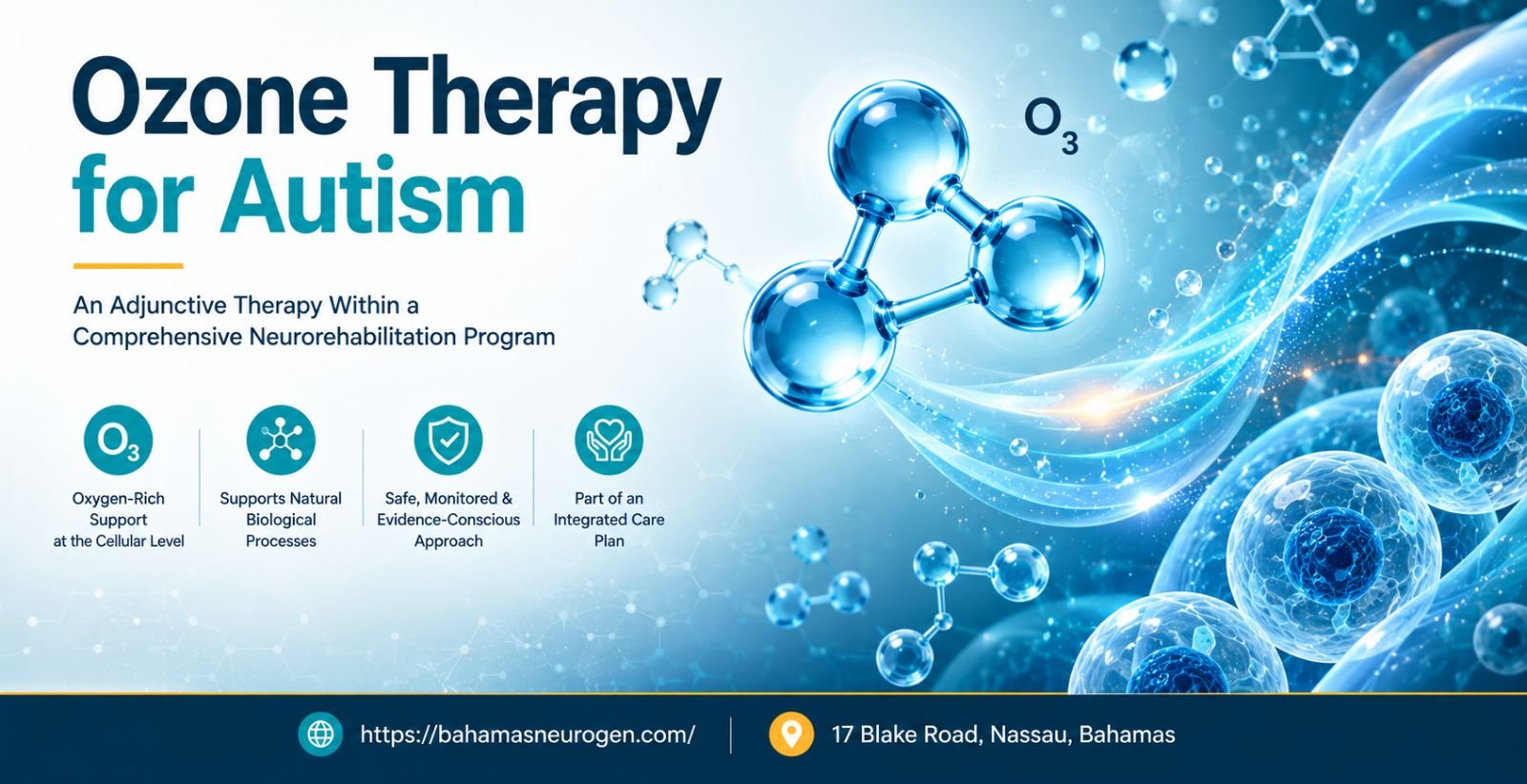
Ozone Therapy
Selected adjunctive medical use
Controlled clinical setting only
Gut Cleansing and Diet
Gastrointestinal comfort and balance
Clinician-guided plan required
Supplements and Micronutrients
Targeted nutritional support
Based on evaluation, not routine
If you encounter claims of curing autism through any therapy, including integrative ones, treat that as a signal to pause and ask questions.
Communication Development:
Every autistic child can communicate. Some speak. Some use a mix of words, gestures, and pictures. Some use augmentative and alternative communication, known as AAC.
For children developing spoken language, support focuses on vocabulary, conversation, and the social use of language. For non-speaking and minimally speaking children, AAC, including picture systems, sign language, communication boards, and speech-generating devices, can transform daily life. Research shows AAC does not delay speech. It often supports it.
“
A child who is not yet speaking is not a child who has nothing to say.
Cell Therapy for Autism
Autologous bone marrow mononuclear cell therapy is an emerging adjunctive option, offered at specialized centers including Bahamas NeuroGen, used alongside core neurorehabilitation rather than as a stand-alone treatment. It uses a child’s own stem cells, drawn from their bone marrow and delivered through a minimally invasive intrathecal injection, with the aim of supporting brain perfusion and immune balance.
Published NeuroGen research in Stem Cells International (Sharma et al., 2013 91% clinical improvement in 32 patients . A larger cohort of 1,011 children , published in Clinical Transplantation and Research, reported the same 91% rate, supported by PET-CT evidence of changes in brain metabolic activity in 401 patients. The researchers themselves note that this therapy is not a cure for autism. Combined with consistent neurorehabilitation, it may support improvements in communication, behavior, and overall quality of life.
For families exploring autologous bone marrow mononuclear cell therapy in depth, see our complete guide to cell therapy for autism, which covers how the procedure works, candidate criteria, safety considerations, and what to expect across the treatment journey.
Considering cell therapy for your child?
Our clinical team can walk you through the published research, the procedure itself, and whether your child may be a suitable candidate.
Talk to Our Cell Therapy Team →
Why Early Intervention Matters
Early intervention is the supportive care that begins as soon as autism is suspected or diagnosed. It works because the young brain is especially adaptable, the same neuroplasticity principle discussed in the brain development section.
The American Academy of Pediatrics recommends autism screening at 18 and 24 months, and NICHD (an NIH institute) supports early intervention as a foundational element of autism care, with measurable long-term benefits in communication, social development, and daily living when started in the toddler and preschool years.
Starting early does not mean rushing into every therapy. It means building a focused, individualized plan with the right team.
In the first weeks after a diagnosis, the most helpful steps are simple.
Give yourself time to absorb the news. Your child is the same child as before.
Learn about your own child, not autism in general. The diagnostic report is a good starting point.
Begin early intervention through qualified professionals, guided by an individualized plan.
Build a multidisciplinary care team that communicates and coordinates.
Connect with other families and, where helpful, with autistic adults who share their experience.
A coordinated team almost always produces better outcomes than a long list of unrelated services.
“
You do not need a complete plan in the first week. You need one steady next step.
Can Children With Autism Improve Over Time
Yes, children with autism can grow, learn, and improve over time. With consistent support and a respectful environment, they often make meaningful progress across communication, daily skills, emotional regulation, learning, and relationships.
Improvement in autism does not mean becoming non-autistic. It means real, functional growth that improves the child’s daily life. The scientific basis for this progress is neuroplasticity, the brain’s lifelong ability to adapt and build new connections through experience and supportive learning.
Progress is usually steady, not dramatic. It is built through small wins. A new word. A calmer morning. A successful school day. A first friendship. Over months and years, these wins build into a path families can clearly see.
What Supports Improvement at Home?
The home is where most development happens. A few consistent practices make a real difference.
Build predictable routines. Wake-up, mealtimes, learning time, outdoor time, and bedtime benefit from clear structure.Support sensory needs. Reduce overwhelming noise or light, offer a quiet space, and provide movement opportunities for children who need them.Prepare for transitions. Give advance notice, use visual cues or timers, and acknowledge that change is hard.Teach daily skills in small steps. Dressing, brushing teeth, and self-care grow through patient practice.Support emotional regulation. Strong reactions are signals of overwhelm. Reduce demands, offer calm, and use simple language in those moments.
Family involvement is one of the strongest predictors of long-term progress. You do not need to become a therapist. You need to be a steady, informed, supportive presence.
What Can Long-Term Improvement Look Like?
Long-term outcomes vary widely. Some autistic adults live fully independently, pursue careers, and build families. Some live independently with selected supports. Some live in supported environments and contribute meaningfully to their communities.
Educational outcomes have improved as autism support has grown. According to CDC data, approximately 73.6 percent of autistic students leave high school with a diploma, a figure that continues to rise as schools and families build more individualized educational pathways.
All of these outcomes are valid. Quality of life, relationships, communication, and the ability to use one’s strengths matter more than any narrow definition of independence.
If you carry worry about the future, you are not alone. The most reassuring truth is that the future is not written by autism. It is shaped over many years by the child, the family, and the supports around them.
Take the next step with Bahamas NeuroGen
From first evaluation to long-term care, our multidisciplinary team is here to walk alongside your family. Book a free, confidential consultation to discuss your child and what support might look like.
Schedule Your child’s Free Consultation →
Frequently Asked Questions About Autism
What are the first signs of autism in a child?
Early signs often include delayed speech, limited eye contact, reduced response to their name, repetitive movements, intense sensory reactions, and difficulty with back-and-forth social interaction. According to the CDC, signs can appear before age 2, though they vary widely from child to child. A pattern of differences, rather than any single sign, points to autism.
At what age can autism be diagnosed?
Autism can often be reliably diagnosed by age 2, and some signs appear as early as 12 to 18 months. The CDC reports the average age of first diagnosis is closer to 5 years, though earlier identification is rising. Acting on concerns early helps families access developmental support and services sooner.
What causes Autism Spectrum Disorder?
Autism develops through a combination of genetic factors and differences in early brain development. According to the NIH, genetics plays the strongest known role, and autism is one of the most heritable neurodevelopmental conditions. There is no single cause, and autism is not caused by parenting style, screen time, diet, or vaccines.
Can children with autism improve over time?
Yes. Many autistic children make meaningful progress in communication, social skills, learning, and daily living as they grow. NIH-supported research shows that consistent early intervention, individualized therapy, and active family involvement are among the strongest factors in long-term improvement. Progress is unique to each child and unfolds gradually, not in dramatic leaps.
What therapies are commonly used to support children with autism?
Helpful therapies include speech therapy, occupational therapy, behavioral interventions, sensory integration, educational support, and parent counseling. The most effective plans are individualized and multidisciplinary, matched to each child's specific strengths and needs. No single therapy fits every child, and well-coordinated, qualified care tends to produce better long-term outcomes than scattered, unrelated services.
What should parents do if they suspect their child has autism?
If you notice developmental differences, talk with your pediatrician right away. The American Academy of Pediatrics recommends autism-specific screening at 18 and 24 months, though you can ask for a screening at any age. Early evaluation opens access to developmental support and services, often even before a formal diagnosis is confirmed.
What is cell therapy for autism, and is it safe?
Cell therapy for autism, specifically autologous bone marrow mononuclear cell grafting therapy, uses a child's own stem cells, delivered intrathecally. Published NeuroGen research reports about 91% of patients show clinical improvement when paired with neurorehabilitation. It is not a cure, adverse events have been minor in published studies, and it is always used as an adjunct to multidisciplinary care.
Sources & References
This article references current data, recommendations, and clinical frameworks from the following authoritative sources:
Centers for Disease Control and Prevention (CDC) cdc.gov/autism/data-research National Institute of Mental Health (NIMH) nimh.nih.gov/health/statistics/autism-spectrum-disorder-asd National Institutes of Health (NIH) / NICHD nichd.nih.gov/health/topics/autism World Health Organization (WHO) American Academy of Pediatrics (AAP) DSM-5-TR and ICD-11 Sharma A, Gokulchandran N, Sane H, et al. (2013) Stem Cells International , Article ID 623875. NeuroGen Brain and Spine Institute.
All data presented in this guide reflects the most current publicly available information at the time of last review. Statistics, particularly prevalence figures, are updated periodically as new monitoring data is released.
A Final Note for Parents
A diagnosis can bring grief, relief, fear, and hope, sometimes all at once. All of it is normal. Your child is the same child you have always loved, simply now understood more clearly.
Care for a child with autism works best as a coordinated, family-centered plan that brings together multiple specialties around a single individualized approach. The specific therapies matter, but the way they are coordinated, communicated, and adapted over time matters even more.
Whether your child is just beginning evaluation or further along the journey, the path forward is built from informed decisions, qualified support, and steady family presence. There is no perfect plan and no single right path. There is only the next thoughtful step.
You do not need to have every answer today. You only need the next step, taken with care, with knowledge, and with the steady belief that your child is worthy, exactly as they are.