Causes of Autism

Understanding the causes of autism helps families see the condition with clarity rather than uncertainty. At Bahamas NeuroGen, we explore genetic, environmental, and developmental factors to bring greater awareness and encourage informed, supportive care.
What are the Causes of Autism?

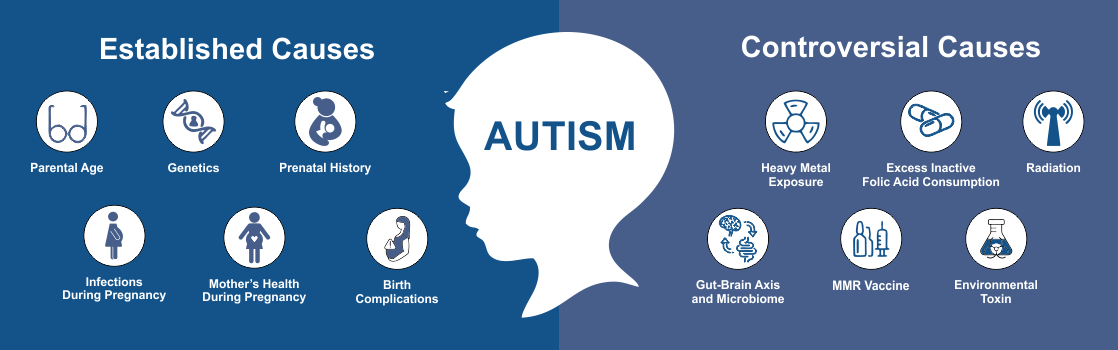
Autism does not have one single cause. It usually develops because of a combination of genetic factors, pregnancy-related issues, environmental factors that affect how the brain grows and connects in early life development.

Early Brain Development Factors

These factors relate to differences in early brain formation and development.

Infections During Pregnancy

Certain infections during pregnancy, such as rubella or cytomegalovirus (CMV), may affect the baby’s developing brain.

Mother’s Health During Pregnancy

Conditions like diabetes, high blood pressure, thyroid problems during pregnancy may increase autism risk. Mental stress during pregnancy may directly affect the brain development of baby.

Medication Exposure

Some medications taken during pregnancy, including certain antidepressants (such as SSRIs), have been studied for possible links.

Birth Complications

Babies born prematurely, with very low birth weight, or who experienced low oxygen levels at birth may have a higher risk of abnormal brain development.

Folic Acid Imbalance

Folate (vitamin B9) is important for brain development. High intake of inactive forms of folic acid may lead to the production of autoantibodies that block folate receptors, which can reduce folate reaching the brain. Genetic variations such as MTHFR mutations in the mother or child may further increase this risk

Gut Brain Axis

Recent studies suggest that imbalance in gut microbiome may influence neurodevelopment and may be a causative factor for autism.

Environmental Factors

These factors relate to external or biological influences during early development.

Heavy Metal Exposure

Exposure to high levels of metals like lead or mercury has been suggested as a possible risk factor.

Environmental Toxins

Air pollution, pesticides, and certain environmental chemicals are linked to Autism.

Radiation Exposure

High levels of ionizing radiation, such as X-rays or nuclear radiation during pregnancy, can affect the development of brain. Researchers are also studying long-term exposure to signals from mobile phones, and mobile towers, in relation to autism.

MMR Vaccine

In 1998 Wakefield Study published in The Lancet and suggested a possible link between the MMR vaccine and autism, It was later retracted, However, the theory that autism is caused by the MMR vaccine is still controversial.

Genetic Factors

40% of autism children may have genetic abnormality.

Family History

Autism can sometimes run in families. Certain genetic changes may affect how the brain develops.

Specific Genetic Conditions

Some genetic conditions, such Fragile X syndrome, Rett syndrome, and tuberous sclerosis are known to be associated with autism.

Parental Age

Older parental age, especially fathers over 40, may increase the chance of having a child with autism.