
Trying to make sense of ozone therapy for autism?
What Is Ozone Therapy?
Understanding medical ozone therapy
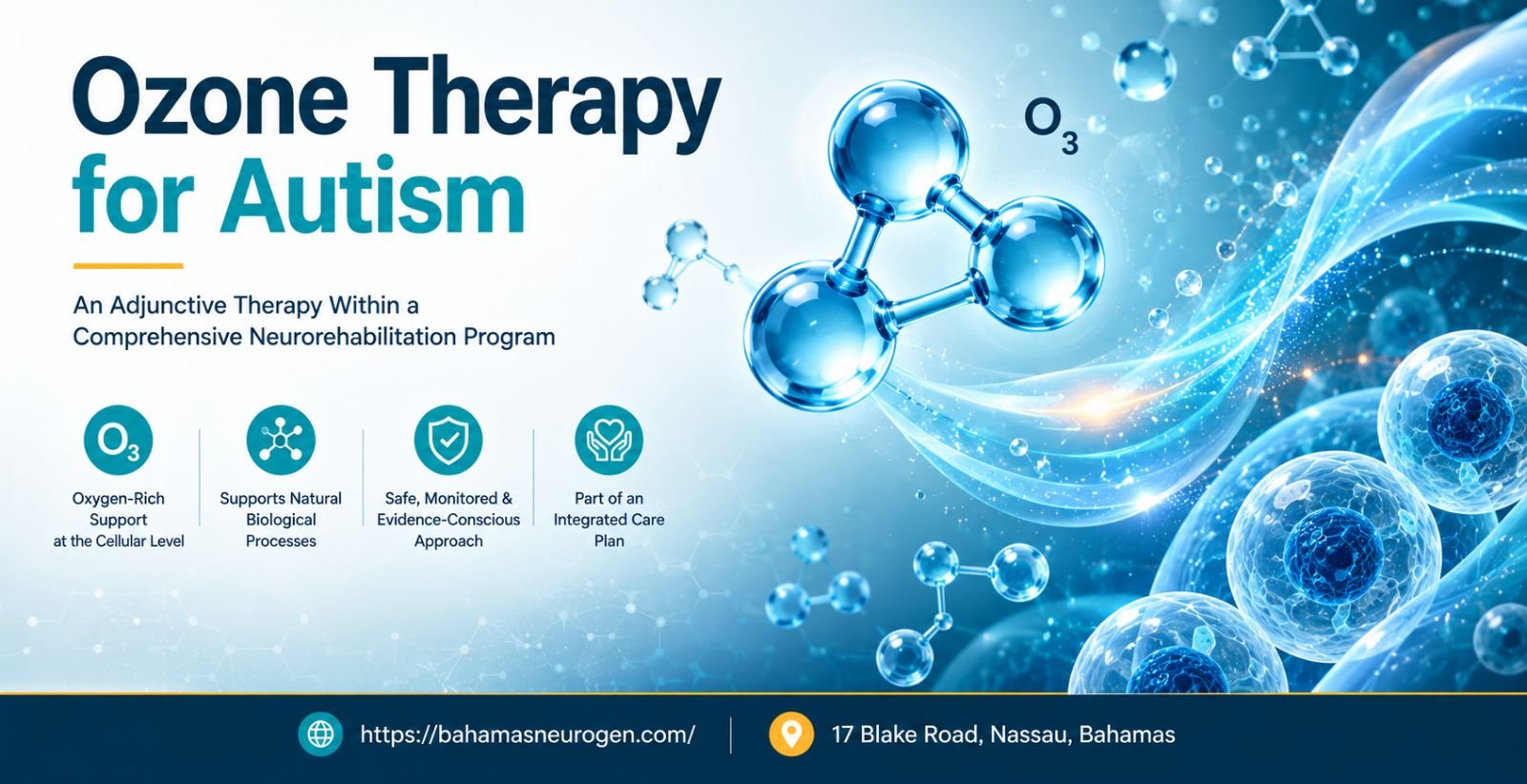
You may see ozone described as an activated, or energized, form of oxygen. The oxygen we breathe is O2, made of two oxygen atoms. Ozone is O3, made of three oxygen atoms.
In a clinical setting, medical ozone therapy refers to the controlled use of a precise mixture of 99.5-95% oxygen and 0.5-5% ozone prepared on site from medical-grade oxygen.
Because ozone is a reactive gas, it is only ever used under trained medical supervision.
You may also see it referred to as autism ozone therapy or ozone treatment for autism.
Medical ozone versus environmental ozone
Environmental ozone is an air pollutant formed in the atmosphere that can irritate the lungs and harm respiratory health.
In contrast, medical ozone is the controlled clinical use of an oxygen and ozone mixture. The two are not the same, although both involve a reactive gas, which is exactly why careful handling matters.
How Ozone Therapy Is Administered?
Medical ozone can be delivered through several routes in a clinical setting. In children, the routes typically used are ear insufflation, rectal insufflation, and ozone face cupping. The route is decided individually for each child by a clinician, with the family’s informed consent. It is never something to attempt at home.
Rectal insufflation
A non-invasive method in which ozone gas is gently introduced into the rectum, where it is absorbed through the intestinal lining into the bloodstream.
Procedure
- The child is placed on the left side with the right knee bent.
- A lubricated rectal tube (using ozonated oil) is inserted about four inches into the rectum.
- The ozone bag or syringe is filled with the prescribed concentration and volume.
- Ozone is administered slowly and gently to ensure comfort and prevent back pressure.
Ear insufflation
A technique in which ozone is delivered through the ear canal after confirming the eardrum is intact, and is absorbed through the ear canal and tympanic membrane.
Procedure
- The outer ear is lightly moistened with a few drops of water.
- The chest piece of the stethoscope is removed.
- The small ear pieces of the stethoscope are placed in both ears, comfortably, neither too tight nor too loose.
- The outlet tube of the ozonator is connected to the chest-piece end of the stethoscope, after carefully adjusting flow and concentration.
- Medical ozone is delivered gently for the recommended treatment duration.
Ozone face cupping
A technique that combines gentle facial cupping (vacuum suction) with ozone, using an ozonated moisturizer around the mouth, cheeks, and chin.
Procedure
- With the child positioned comfortably, a thin layer of ozonated moisturizer is applied to the cheeks and the skin around the mouth and chin.
- A small glass cup with two stems, one delivering medical ozone and one applying vacuum suction, is placed on the skin and moved gently over the face in an upward motion.
- The therapy is performed slowly, with minimal suction, by a trained therapist, enough to stimulate circulation and lymphatic drainage without discomfort.
- After the session, the skin is cleaned and the child may leave.
Why Is Ozone Therapy Being Explored in Autism?
It is natural to wonder why ozone therapy is discussed in connection with Autism Spectrum Disorder or ASD at all. The interest comes from the action of ozone on the body’s oxygen delivery, immune response, and cellular energy systems.
How It Works: The Science of Cellular Respiration
Ozone therapy works by increasing the oxygen-carrying capacity of the blood.
When introduced to the body, it:
- Stimulates Antioxidants: It triggers the body’s own antioxidant response, which is crucial for reducing oxidative stress in children with autism.
- Wakes Up “Hypoxic” Brain Regions: Certain areas of the brain in autistic children may be under-functioning due to poor oxygenation. Ozone helps deliver vital oxygen to these “hypoxic” zones.
- Acts as a Natural Germicide: Ozone is a potent tool against hidden viral, bacterial, fungal, and parasitic infections that often tax the immune systems of children on the spectrum.
- Ozone Therapy and Gut Health: Medical ozone therapy has a potential role in reducing oxidative stress and gut inflammation. It is believed that improving gut health and supporting the gut brain axis may contribute in reducing behavioural issues in autism.
- Reduces inflammation: It helps in reducing inflammatory cytokines and pain markers which in turn reduces swelling and pain thus improving tissue healing, wound repair.
- Improving Mitochondrial Function: By enhancing oxygen utilization and stimulating the body’s antioxidant defense systems, it stimulates cellular energy (ATP) production promoting healthier cell function and overall vitality.
Benefits of Ozone Therapy for Children with Autism
Beyond oxygenation, this therapy offers a systemic “reset” for a child’s internal environment:
- Immune System Support: Boosts immunological and neuroendocrine activity to help the body fight off environmental stressors.
- Reduced Inflammation: Lowers systemic inflammation, which is often linked to behavioral and digestive challenges.
- Improved Gut Health: By targeting harmful bacteria, fungi, and parasites, ozone therapy promotes a healthier microbiome.
- Natural Detoxification: Assists the body in flushing out toxins and heavy metals.
- Energy and Growth: Encourages the release of essential growth hormones and increases overall cellular energy levels.
What Does the Research Say About Ozone Therapy for Autism?
Pámanes (2024) evaluated 22 children with autism spectrum disorder and found that most were at high risk of intestinal candidiasis based on a screening questionnaire, proposing ozone therapy as an adjunctive treatment because of its reported anti-inflammatory, immunomodulatory, and antifungal properties. The paper concludes that ozone therapy helps to improve quality of life in autistic children with suspected intestinal candidiasis.
Buch (2018) reported clinical observations from a series of children with multiple disabilities, including autism spectrum disorder, who received ozone therapy as part of an integrative treatment approach. The paper describes improvements in areas such as communication, behavior, attention, sleep, and gastrointestinal symptoms in some autistic children.
Most ozone research overall has focused on areas outside autism, such as wound care and certain pain conditions. Autism-specific research is far more limited.
Is Ozone Therapy Safe for Children with Autism?
Is ozone therapy safe?
Ozone therapy is generally considered safe when done under medical supervision. Which form of ozone therapy is appropriate depends entirely on the individual child and the clinical setting.
The importance of professional supervision
If ozone therapy is used at all, it should only ever be administered by appropriately trained clinicians, in a controlled setting, with full informed consent. Inhaling ozone, in particular, can irritate the airways and lungs.
Potential risks and side effects
Reported side effects vary depending on how ozone is administered and can include temporary discomfort. Accidental inhalation of ozone may lead to minor symptoms like burning of eyes, coughing, nausea or vomiting, or mild headache. Rectally administered ozone may very rarely give mild discomfort, a feeling of passing gas, gurgling, or mild cramps. Serious adverse events are rare, which is why medical oversight and an honest discussion of risks are essential.
Contraindications for ozone therapy
Systemic ozone therapy is not recommended for individuals with certain medical conditions due to potential health risks. Contraindications include hyperthyroidism, thrombocytopenia (low platelet count), bleeding disorders, active menstruation, active bleeding from any body orifice (nose, ears, urethra, rectum, vagina, etc.), acute hypoglycemic episodes or low blood sugar levels, glucose-6-phosphate dehydrogenase (G6PD) deficiency, and pregnancy.
Similarly, ear ozone insufflation is contraindicated in individuals with seizure disorders or history of seizure or a child with past EEG abnormalities, a history of ear surgery or cochlear implants, and active ear infections such as Acute Suppurative Otitis Media (ASOM). Delivering ozone therapy in any form is also contraindicated in any progressive degenerative conditions.
Hence consultation and detailed medical history with a health care professional is essential before administering any ozone applications.
Is ozone therapy safe for children with autism?
Safety depends on the individual child. Our clinical team can talk you through what is and is not appropriate, with no pressure.
Questions Families Often Ask Before Considering Ozone Therapy
Before considering any complementary or supportive therapy for autism, it helps to ask a few clear questions. These are the ones we encourage every family to think through.
Key Questions
How is suitability evaluated? Through individual medical evaluation, never by assumption.
How does it fit alongside established care? Only as a possible adjunct. Proven therapies remain the foundation.
Why does professional guidance matter? Because these questions call for clinical judgment, not online claims. Good guidance helps you weigh the evidence honestly and decide what is right for your child.
How Ozone Therapy Fits Into a Comprehensive Autism Care Plan
Whatever a family decides about complementary therapies for autism, the heart of integrative autism care is a comprehensive, evidence-based plan. These foundation therapies do the central work.
-
-
- Speech therapy, supporting communication and language.
- Occupational therapy, supporting daily skills and sensory needs.
- Behavioral interventions, supporting learning and development.
- Developmental support, tailored to the child’s stage and goals.
- Nutritional support, as part of overall health and wellbeing.
Ozone therapy should only be considered an adjunctive intervention, something that might sit alongside established care as one part of our integrative therapy approach, rather than replace it.
Ozone Therapy at Bahamas NeuroGen
At Bahamas NeuroGen, our focus is comprehensive, honest autism care. Here is how we work.
Individualized evaluation
Every child is different, so we begin by understanding your child, not by recommending a fixed package.
Multidisciplinary autism care
Several specialists work together around one coordinated plan, built on established therapies.
Family-centered approach
We listen to your concerns, explain things clearly, and make space for your questions. You are part of the team.
Where families ask about complementary approaches such as ozone therapy, we discuss them honestly, including the limits of the current evidence, and we never present them as proven.
What Families Can Expect During the Evaluation Process?
Care with us begins before you travel and continues after you return home. Here is what the process looks like.
Step 1: Remote consultation. Once you share your child’s medical reports, our doctors review them and discuss the recommended approach with you by call, email, or video. You do not need to travel for this first step.
Step 2: Pre-visit coordination. Our coordinators walk you through the proposed plan and the next steps, and help you prepare for the visit.
Step 3: On-site assessment. After admission, our team carries out the medical and functional assessments your child needs, so the plan is based on a full picture.
Step 4: Personalized care plan. We develop a plan tailored to your child, built around established therapies, with any complementary approach considered only as a possible adjunct.
Step 5: Therapy guidance and follow-up. Our therapists train you in the exercises and therapies to continue at home, and you leave with a clear summary to share with your child’s providers.
International Care Support at Bahamas NeuroGen
With you from the first call to the journey home
We work with many families who travel to Nassau from the United States, Canada, and beyond, and we support the practical side of the journey from start to finish.
- Visa and travel assistance. We provide a clear list of the documents you need. Families from the United States, Canada, the United Kingdom, Germany, France, Italy, Brazil, and Argentina do not require a visa to enter The Bahamas.
- Payment guidance. Your assigned patient coordinator explains the available payment options. US dollars are accepted in The Bahamas.
- Airport pickup. A member of our team meets you at the airport and arranges transport by car, or medical transport if needed.
- Local transportation. We arrange travel within the city based on your child’s needs during the stay.
- Accommodation for you and your child. Both your child and you as caregiver are supported throughout the stay.
- A smooth departure. We coordinate discharge around your travel schedule, provide a clear summary to take home, and arrange your drop-off at the airport.
Wherever you are traveling from, our team is here to help you plan.
Frequently Asked Questions
Is ozone therapy a cure for autism?
No. There is no cure for autism, and ozone therapy is not a cure but it can help to manage symptoms.
Can ozone therapy replace speech therapy?
No. Speech therapy is an established, evidence-based part of autism care. Ozone therapy is an adjunct and is not a replacement for it.
Can ozone therapy replace occupational therapy?
No. Occupational therapy is a foundation therapy. Any complementary approach should sit alongside it, never in its place.
What does current research say?
For autism specifically, the research is limited to hypotheses and small or preliminary reports, with no controlled clinical trials showing benefit. Findings remain inconclusive.
Is ozone therapy safe for children?
Medical ozone therapy is generally considered safe when administered by qualified healthcare professionals under appropriate medical supervision.
Are there any side effects of ozone therapy in kids?
Side effects of ozone therapy are generally mild and depend on the method of administration. They may include temporary discomfort, mild cramps, or gas with rectal administration, while accidental inhalation can cause eye irritation, coughing, headache, or nausea. Serious complications are rare, which is why ozone therapy is only performed under qualified medical supervision.
Are there any contraindications of ozone therapy in kids?
Systemic ozone therapy is generally contraindicated in individuals with hyperthyroidism, thrombocytopenia, bleeding disorders, menstrual days, active bleeding from any orifices, acute hypoglycemia, or glucose-6-phosphate dehydrogenase (G6PD) deficiency. Ear ozone insufflation is contraindicated in individuals with active ear infections (such as acute suppurative otitis media), a history of ear surgery or ear implants, or any history of seizure. A thorough medical evaluation is always performed before treatment.
What happens during an evaluation?
A medical review, a functional assessment, shared goal setting, a personalized care plan built on established therapies, and ongoing monitoring.
Can international families access care at Bahamas NeuroGen?
Yes. We support many families from the United States, Canada, and beyond, and we help coordinate care from the first inquiry.
Take the Next Step
If you are weighing your options, the most useful next step is an honest conversation.
Ozone therapy continues to be explored as a complementary topic in autism care. Every child is different, and professional evaluation matters before considering any intervention.
In a consultation, we will listen, explain your options plainly, and help you decide what is right for your child, with no pressure and no obligation.
Ready to talk about your child’s care plan?
Sources and References
- US Food and Drug Administration. 21 CFR §801.415: Maximum acceptable level of ozone. Code of Federal Regulations, Title 21.
- Nicoletti G, Saler M, Villani L, Rumolo A, Tresoldi MM, Faga A. Safety, pitfalls, and misunderstandings about the use of ozone therapy as a regenerative medicine tool. A narrative review. PubMed / Regen Med Res. 2020.
- Hyman SL, Levy SE, Myers SM; AAP Council on Children With Disabilities. Identification, Evaluation, and Management of Children With Autism Spectrum Disorder. Pediatrics. 2020;145(1):e20193447. American Academy of Pediatrics.
- Filipek PA, Accardo PJ, Ashwal S, et al. Practice parameter: Screening and diagnosis of autism. Report of the Quality Standards Subcommittee of the American Academy of Neurology and the Child Neurology Society. Neurology. 2000;55(4):468-479.
- World Health Organization. Autism spectrum disorders. WHO Fact Sheet.
- Pámanes MR. Presencia de cándida intestinal en niños autistas y la alternativa terapéutica asociada a la ozonoterapia. Ozone Therapy Global Journal. 2024;14(1):97-122.
- Buch R. Ozone therapy in multiple disabled children. J Ozone Ther. 2018;2(2). doi:10.7203/jo3t.2.2.2018.11151.
-